Jersey
Heritage
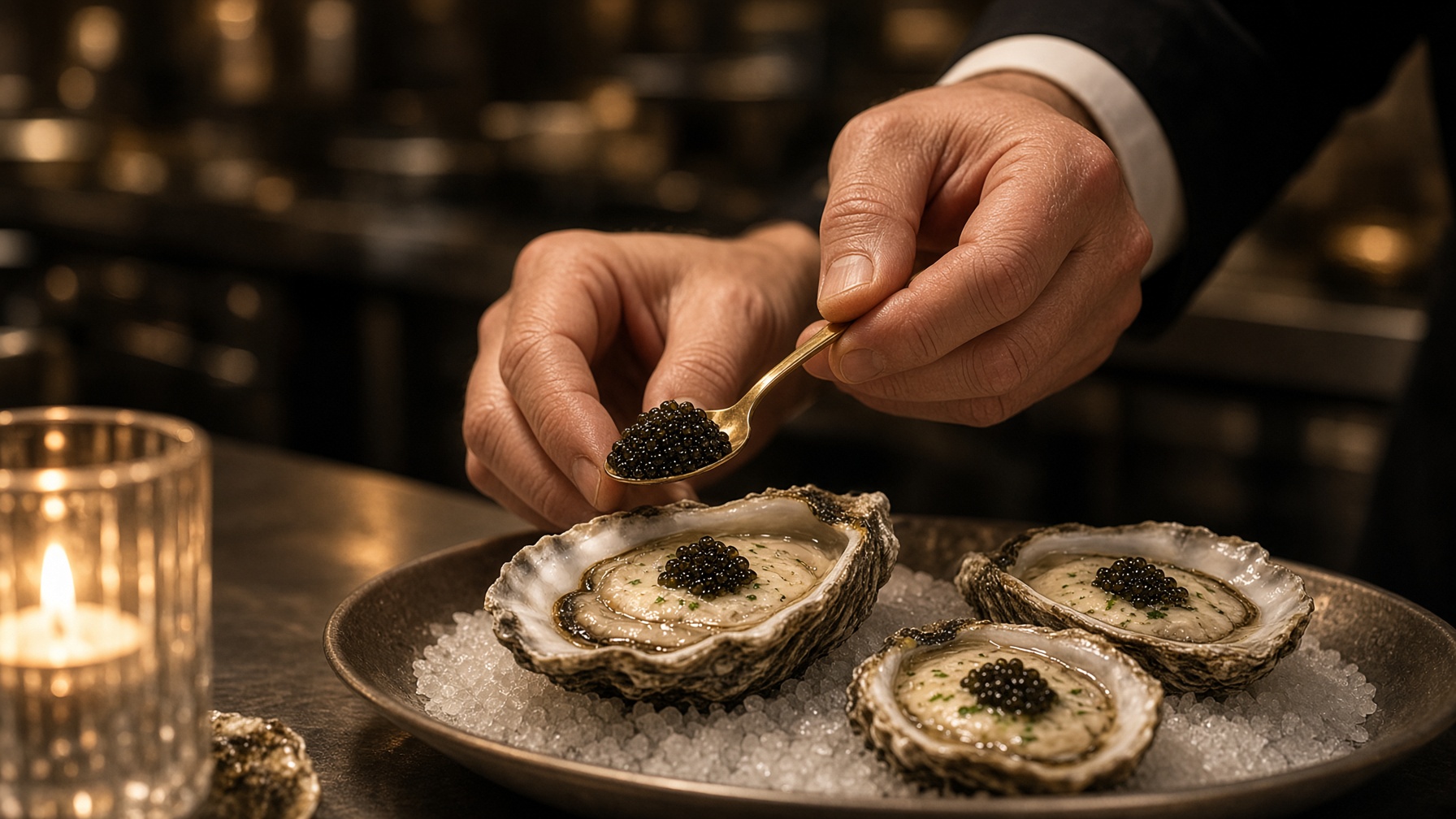
Jersey is the largest of the Channel Islands: fourteen miles from France, a Crown dependency, an island of granite, cow, potato and tide. Our crest borrows the three golden leopards of the island’s arms. The lobster, the oyster heavy with caviar, and the scallop are not decoration. They are the reason the house was built on this cliff.
1204
An island of the Crown
When continental Normandy fell, Jersey remained with the English Crown. The three golden leopards on our crest are the island’s arms — the same beasts that walk the royal shield — a reminder that this rock in the Channel has always looked both ways, to England and to France.
1462
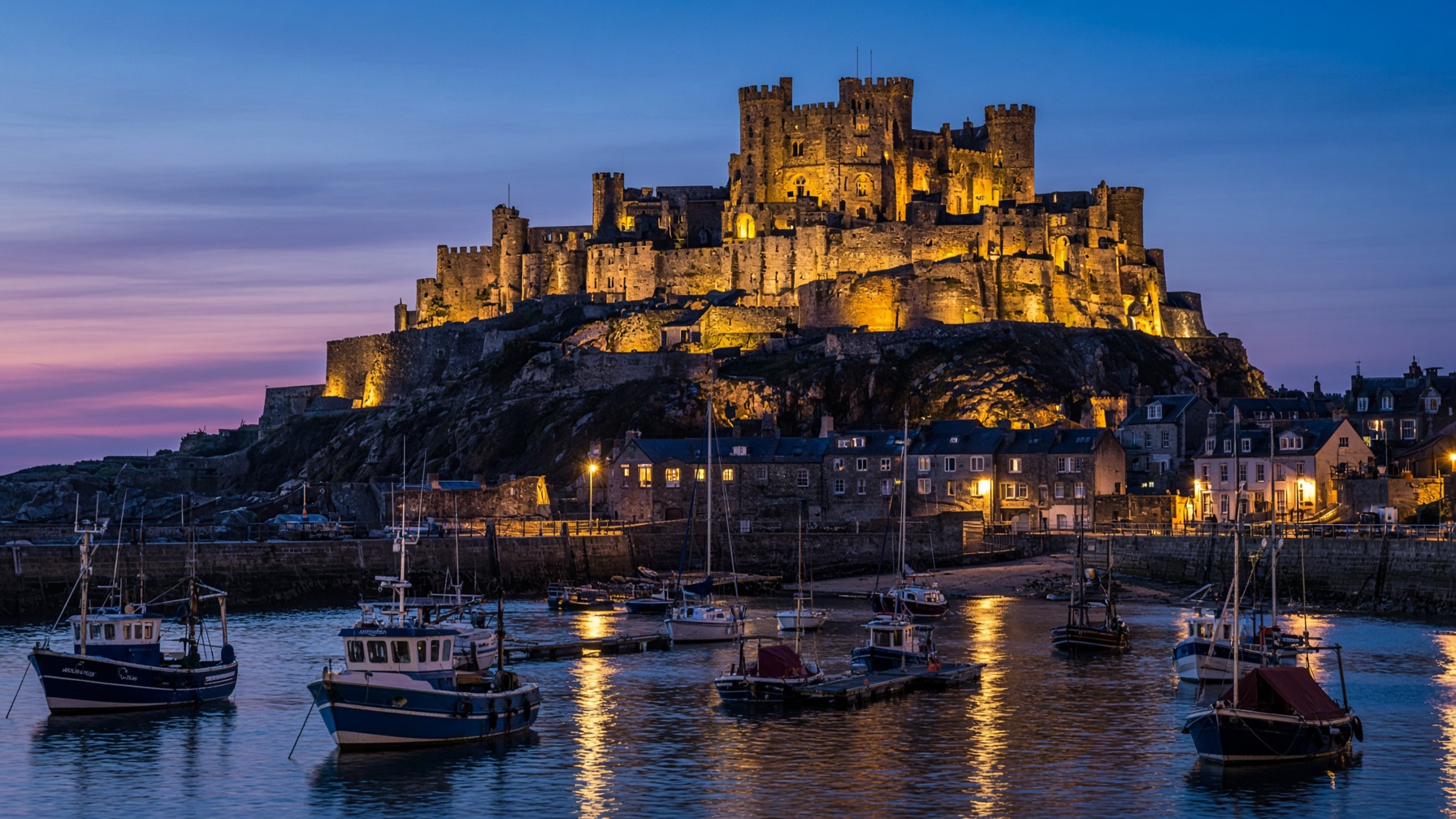
Mont Orgueil watches France
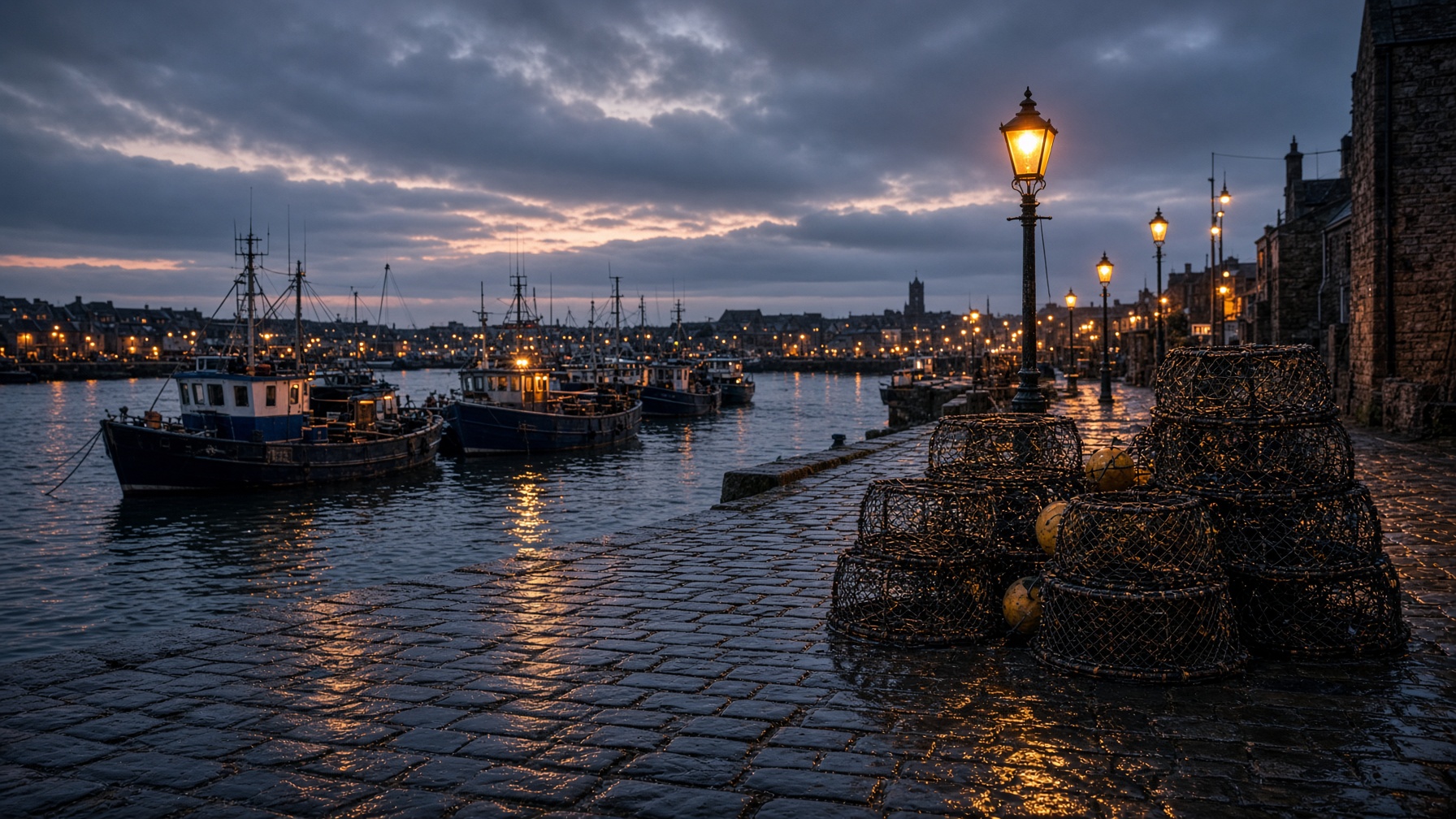
Gorey’s castle, Mont Orgueil, has stared at the Cotentin for six centuries. Beneath it, a fishing village landed lobster, crab and the first oysters. The east coast still feeds our ice.
1810–1871
The oyster years
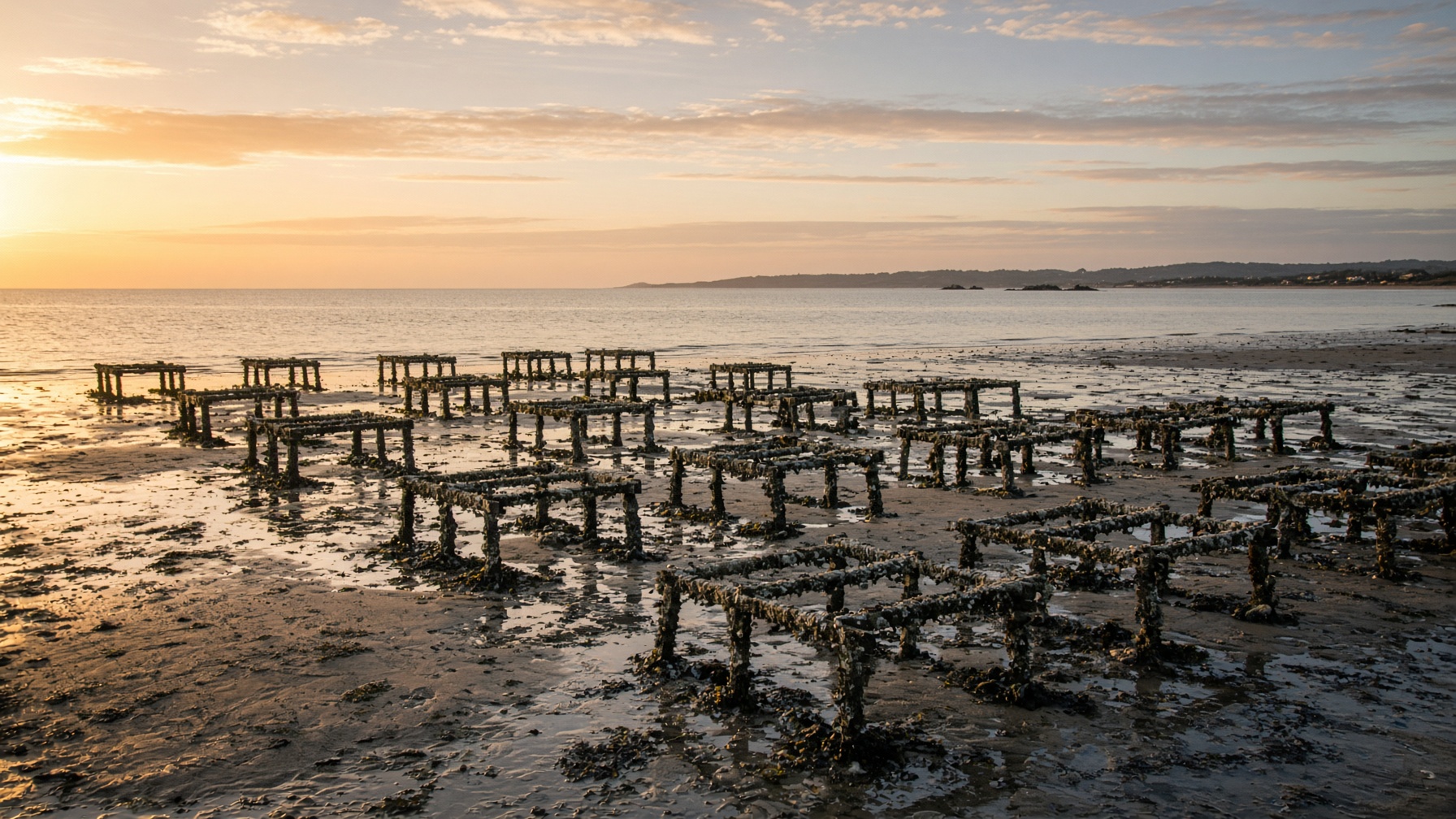
The Royal Bay of Grouville became one of the great oyster parks of Europe. At its height thousands of men worked the trestles facing Normandy. The beds remain — 25 hectares of parks in a tidal range among the largest on earth.
1928
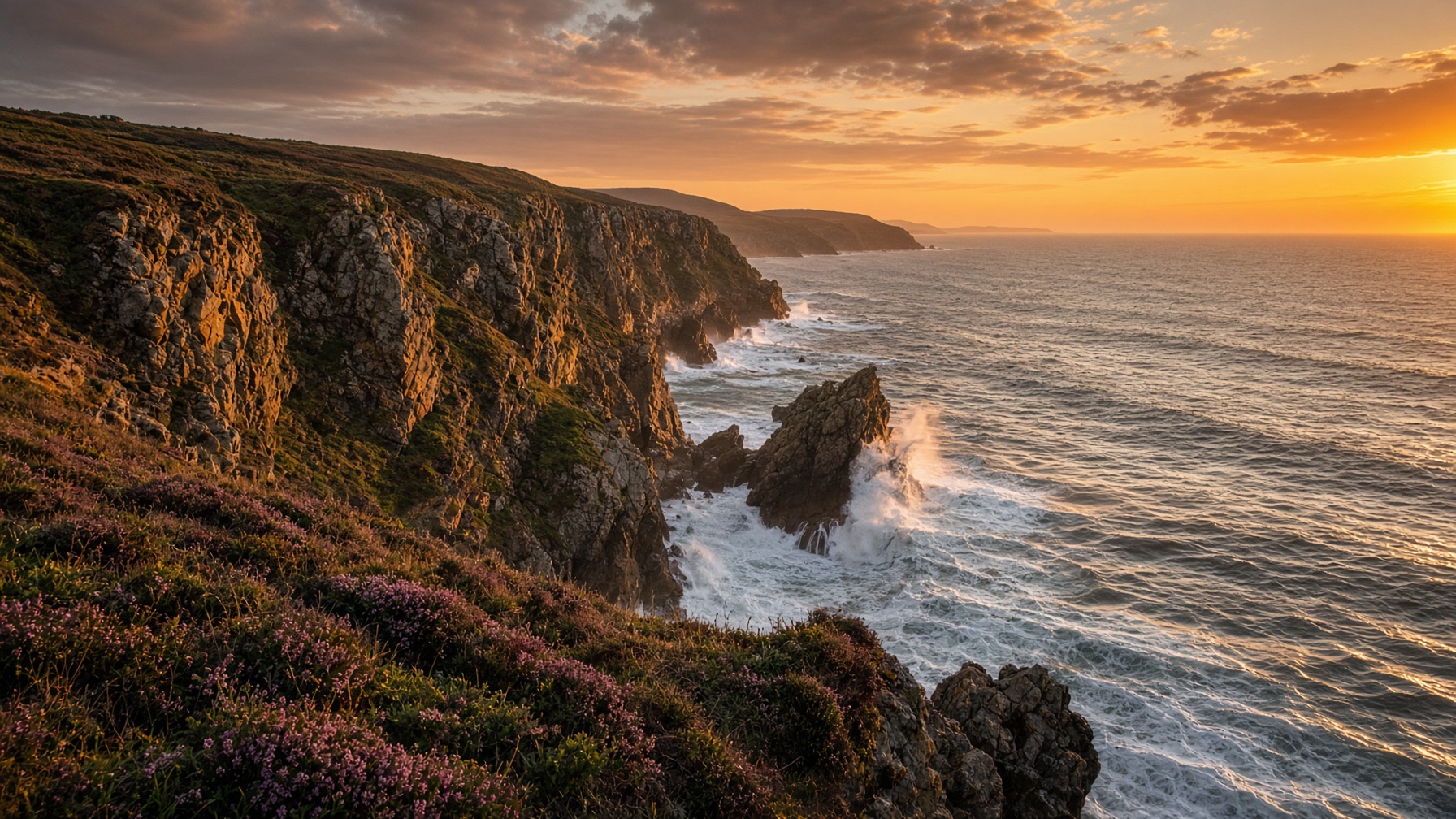
A captain’s house on the north cliffs
Cliffside was raised as a granite lookout for a St Mary captain who had run the Channel in sail. The dining room still faces the drop. The lamps are the original sconces, rewired, still dimmable by hand.
1974
The house opens its table
The Le Maistre family opened the dining room to guests. The rule has not changed: the kitchen buys only what the morning boats and the Grouville parks can prove. Ormer, when the licensed tides allow. Lobster from pots you can see from the terrace.
Today
Premium seafood · Jersey heritage
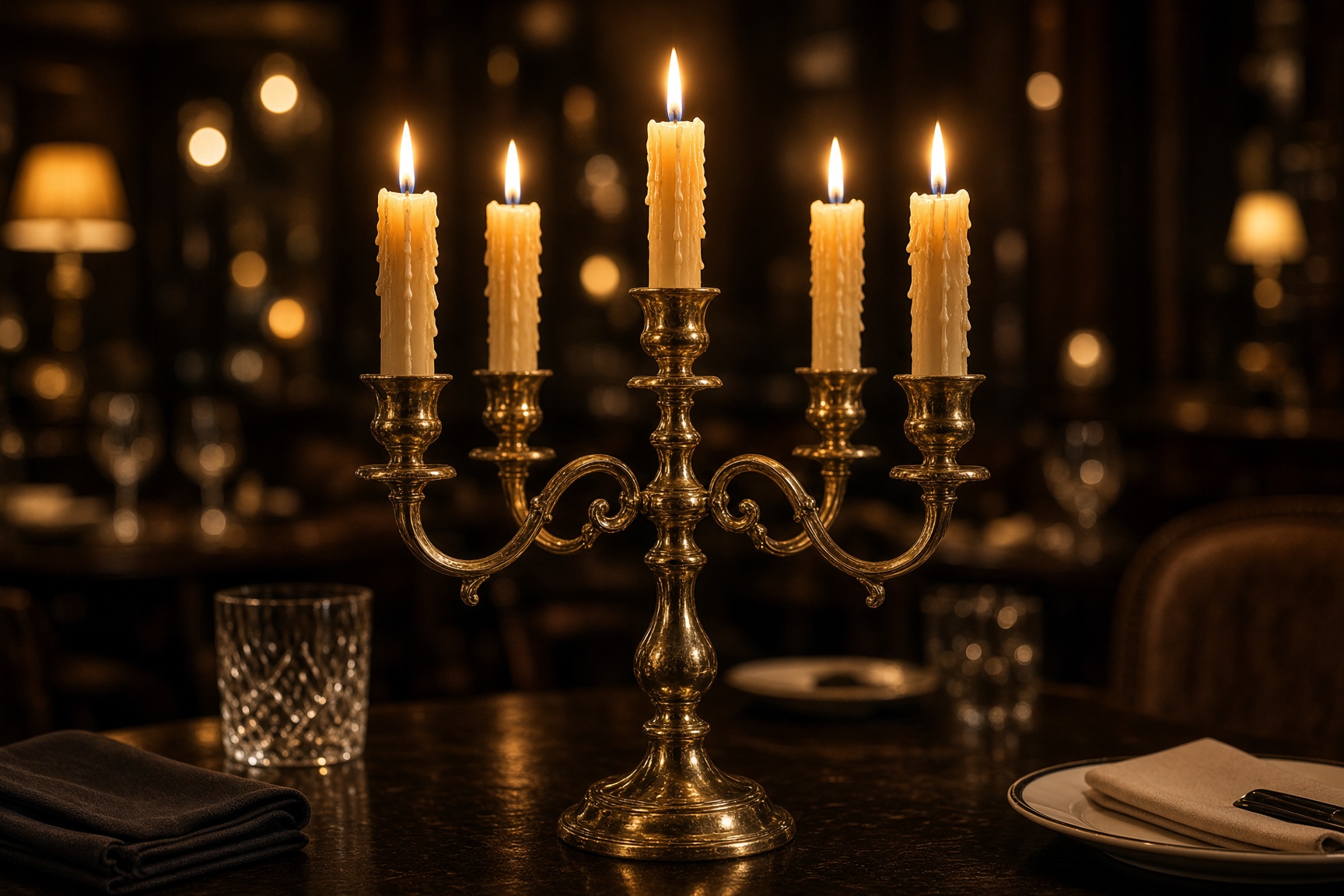
We still light candles before we light anything else. We still write the menu after the landing. The three leopards, the lobster, the oyster and the scallop on our crest are not ornaments — they are the bill of fare, and the island.